 tea.ceo
How to brew Assam tea, strong enough for milk
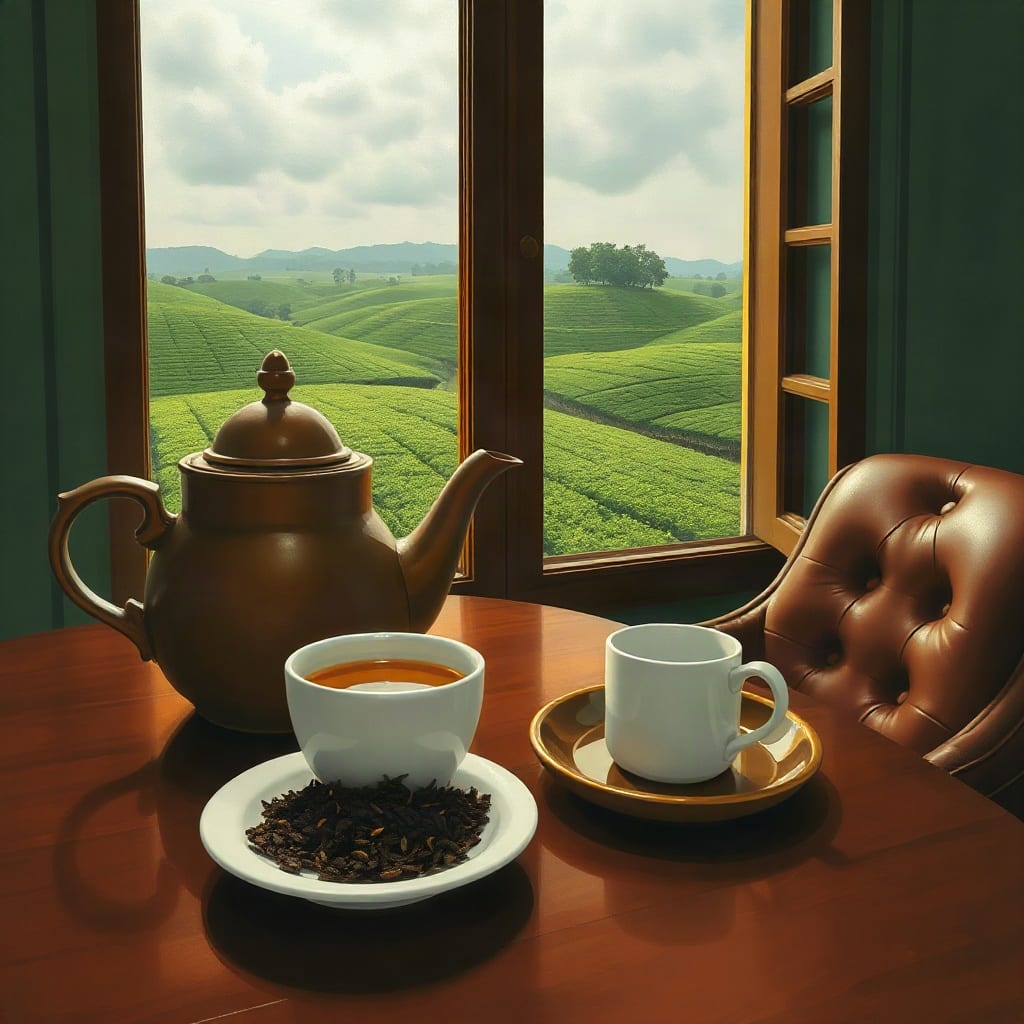
Assam is the breakfast tea's breakfast tea. It grows in the low, hot, very wet valley of the Brahmaputra in north-east India, and it makes a dark, malty, full-bodied cup — the backbone of most English and Irish breakfast blends, and the reason those blends stand up to milk. Of all the black teas it is the least fussy. It wants a full boil, a decent length of brew and very little else.
How to brew it
The water: freshly boiled. Assam is not a tea to let cool; Twinings and Taylors of Harrogate both pour straight from the kettle.
The leaf: one teaspoon per cup, which is Twinings' and Taylors' measure — about 2 to 3 grams to a 200 ml cup. For a pot, the old rule of one per person and one for the pot is Taylors' own.
The time: four to five minutes is Taylors' figure for its Pure Assam. Twinings gives three to five for its second flush, and as little as two to three for its everyday loose Assam if you like it strong but not heavy. Small broken leaf colours the water fast; a large whole leaf wants the full five.
Stronger, not longer: if the cup is too weak, add leaf next time rather than leaving it in. The tannins come out late, and a long brew turns a strong cup into a bitter one.
Milk and sugar
Assam is built for milk, and Taylors says as much on its Pure Assam: the flavour is best with it. A splash is enough to round off the edges without drowning the malt. Sugar is a matter of upbringing. A fine golden-tipped Assam is worth trying without either, once, before deciding.
Orthodox and CTC
Assam is made in two ways, and the packet will usually say which. Orthodox leaf is rolled whole or broken into pieces, and it is what loose-leaf tea shops sell. CTC — crush, tear, curl — passes the leaf through rollers into small hard granules that give up their colour and strength in a minute or two. It is the tea in most teabags, and the one people boil with milk and spice for masala chai.
Assam (Orthodox) is a geographical indication registered in India, held by the Tea Board, so the name on an orthodox tea is a promise about where it was grown.
The golden tips
The best Assam has gold in it: the downy buds of the bush, which turn golden as the leaf is processed. They give a sweeter, smoother cup, and the grades that mention them — golden, tippy, the GBOP of Twinings' Langharjan estate tea, the long strings of letters like FTGFOP — cost more for it. Twinings describes the tips in its second flush as giving a raspberry-jam sweetness, which is a generous way of saying it is very good.
The second flush, picked in early summer before the monsoon, is the prized one: richer and maltier than the spring picking. Like Darjeeling, Assam is sold by flush, but unlike Darjeeling it never wants cooler water — every flush takes the boil.
Where it comes from
Tea grew wild in Assam long before anyone brewed it for London. The Singpho people of the region made a drink from it, and in 1823 a Scottish trader, Robert Bruce, was shown the plant with the help of a Singpho chief, Bisa Gam, as World Tea News recounts. It turned out to be a variety of its own — Camellia sinensis var. assamica, larger-leaved than the Chinese bush — and the first Assam tea reached auction in London in 1839.
Today the state grows more than half of India's tea, World Tea News reports, and roughly a tenth of the world's.
How to brew Assam tea, strong enough for milk: questions
What temperature should water be for Assam tea?
Freshly boiled. Twinings and Taylors of Harrogate both brew Assam with water straight off the boil; it is a robust black tea and does not need cooling.
How long do you steep Assam tea?
Four to five minutes, by Taylors of Harrogate's instructions for its Pure Assam. Twinings gives three to five minutes for its second flush. For a stronger cup, add more leaf rather than brewing longer.
Do you put milk in Assam tea?
Usually, yes. Assam is malty and full-bodied enough to carry milk, and Taylors of Harrogate recommends it. A fine golden-tipped Assam is worth trying without, at least once.
What is the difference between orthodox and CTC Assam?
Orthodox Assam is rolled whole or broken leaf, sold loose. CTC (crush, tear, curl) Assam is machine-cut into small granules that brew strong and fast; it fills most teabags and is the usual tea for masala chai.
Source: Twinings, 2nd Flush Assam GBOP1 checked against the source
More tea guides
How to brew lapsang souchong
Lapsang souchong is the smoked black tea of Fujian, its leaves dried over pine fires. Brew about 3 g in 240–300 ml of water just off the boil, 90–95°C, for two to five minutes; or brew it gongfu style in a small pot kept for this tea alone, and steep it again and again.
How to brew Ceylon tea
Ceylon is the bright, brisk black tea of Sri Lanka, and it is brewed plainly: two and a half grams of leaf to a 220 ml cup, water at a full boil, two to three minutes. A Sri Lankan exporter's guide to the method, the Tea Board's seven regions, and why the high-grown ones take no milk.
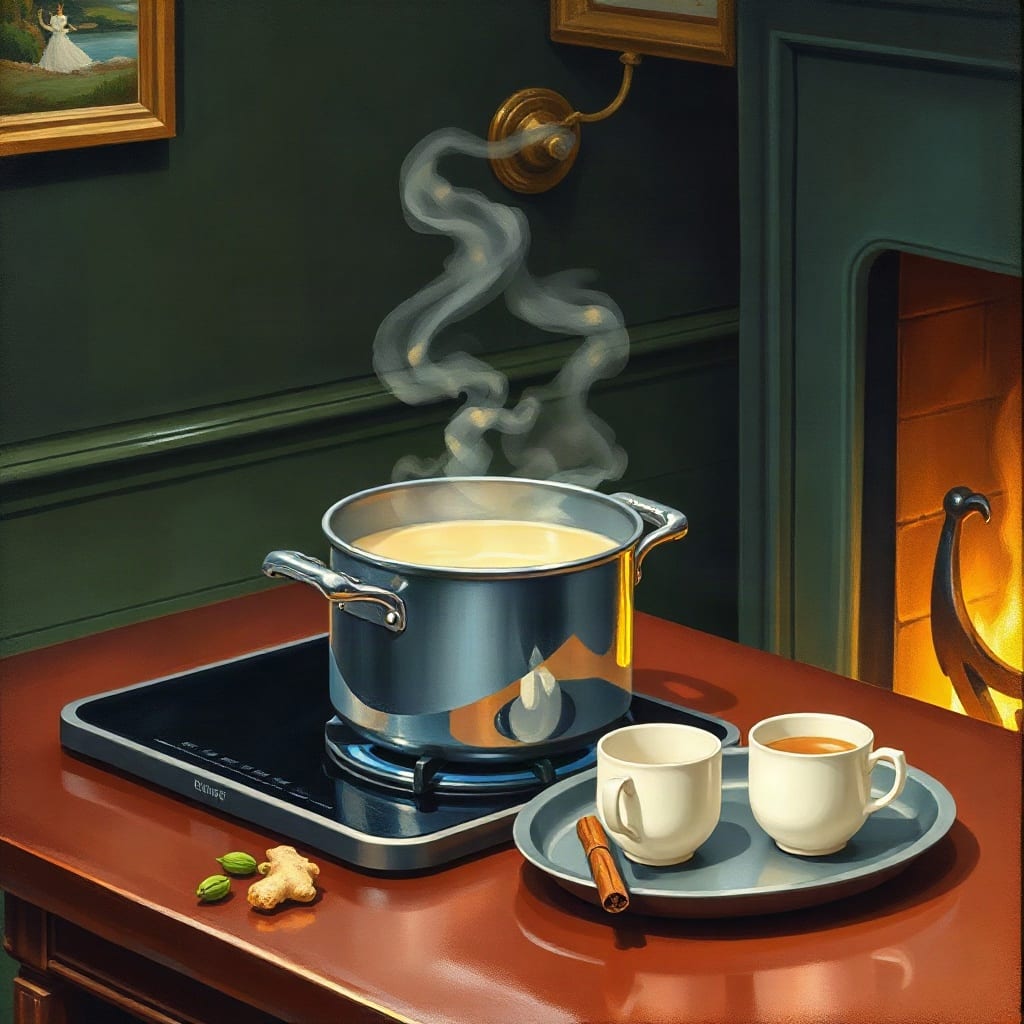
How to make masala chai
Masala chai is tea boiled with spices, milk and sugar, not tea with a spiced syrup stirred in. Dishoom's recipe as published: a litre of water, ginger, peppercorns, cardamom, cinnamon and cloves simmered ten minutes with Assam leaf, then half a litre of milk and sugar boiled in for ten more.