 tea.ceo
 How to brew pu-erh tea balls: sheng xiao qiu
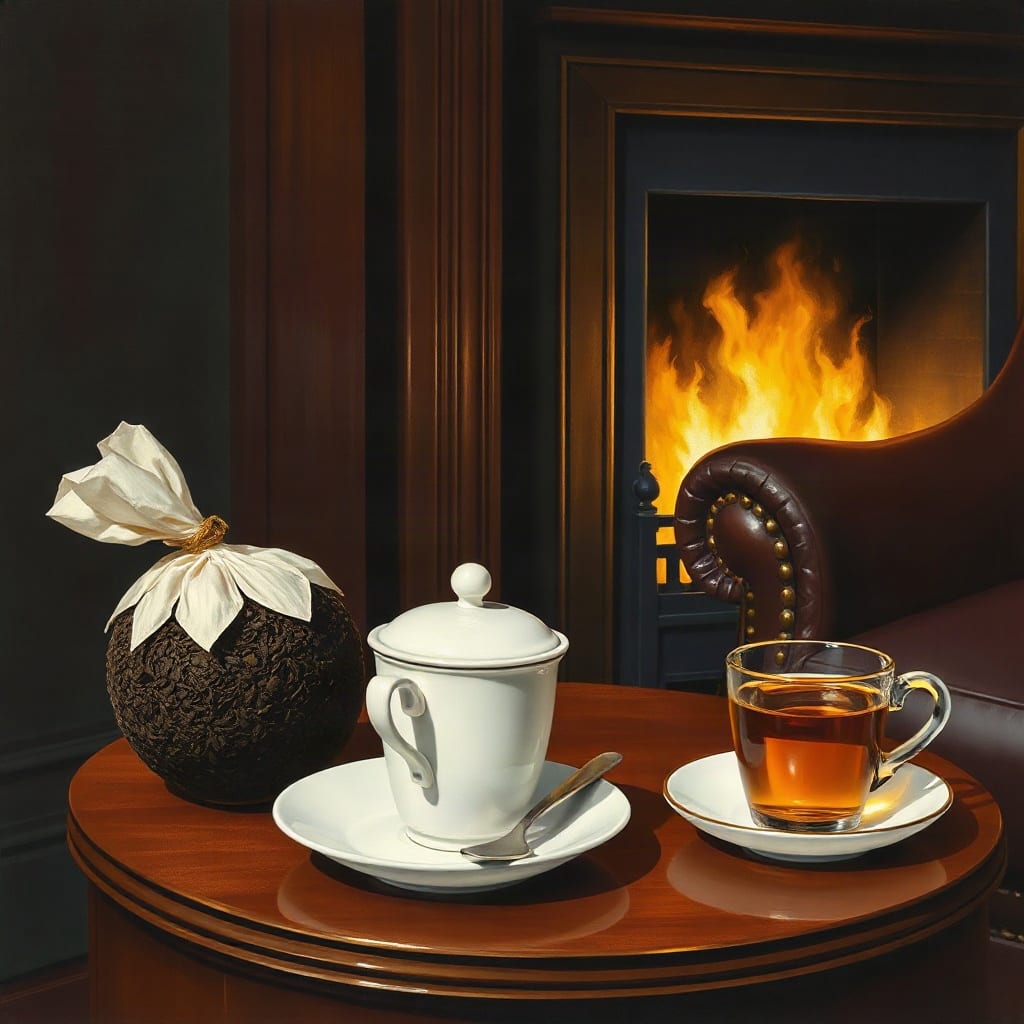
A tea ball is pu-erh made for one sitting: a single serving pressed hard into a sphere and wrapped on its own, so there is nothing to weigh and no cake to prise apart. The Chinese is xiao qiu, a small ball; English-speaking shops tend to sell the same thing as dragon balls. Sheng means raw — pu-erh left to age by itself rather than fermented in a heap first — so expect a cup that is bright and a touch astringent rather than dark and earthy. The pu-erh guide tells the two apart at more length.
One ball is the measure
Balls are sold by the piece. Teasenz, a Chinese tea shop that sells across Europe, puts its raw pu-erh balls at about 7 grams; Yunnan Sourcing's and Meimei Tea's weigh about 8. Every figure below is for one ball, put in whole. If yours is smaller, keep the proportion and use less water.
The rinse
Pour hot water over the ball, wait, and throw the water away. Teasenz rinses a tightly pressed piece for longest — up to thirty seconds — and a ball is pressed tight. The rinse starts it opening, warms the pot and washes off any dust from storage.
How to brew it
In a gaiwan or small pot: Teasenz brews one ball in 100 ml of water at 100°C — forty seconds for the first steep, then 25, 15, 20, 25, 30 and 30. The first is the longest because the ball is still opening; by the second the leaf has come loose and gives quickly, and from the third each steep is lengthened as it tires.
Short from the start: Yunnan Sourcing's advice for its own dragon balls runs the other way: short infusions at first, to coax the flavour out gradually. It is the gentler way into a young ball that came out bitter at forty seconds.
The water: Teasenz pours its balls at a full boil, but its own guide to water for raw pu-erh is cooler for small or broken leaf — 80 to 90°C while the tea is under three years old, 90 to 95°C from four to ten, and 95 to 100°C after that. If the first cup is harsh, let the kettle stand.
How long it lasts: Teasenz's schedule stops at seven steeps; Meimei Tea reckons one of its balls good for up to twenty, brewed gongfu-style.
In a teapot: one ball to 500 ml, and Teasenz gives two minutes, then a minute and a half, two minutes and four. Fewer cups, rather less ceremony, and entirely respectable.
How to brew pu-erh tea balls: sheng xiao qiu: questions
How do you brew a pu-erh tea ball?
Unwrap one ball, rinse it in hot water for up to thirty seconds and pour that away, then brew it whole in about 100 ml. Teasenz uses water at 100°C and steeps of 40, 25, 15, 20, 25, 30 and 30 seconds; in a 500 ml teapot, 2, 1½, 2 and 4 minutes.
How many times can you steep a pu-erh tea ball?
Teasenz's schedule runs to seven steeps in a small pot and four in a teapot. Meimei Tea reckons a ball good for up to twenty, brewed gongfu-style.
What does xiao qiu mean?
Small ball (小球): a single serving of pu-erh pressed into a sphere. Sheng xiao qiu is raw pu-erh made that way; English-speaking shops often sell the same thing as dragon balls.
Source: Teasenz, 2019 Raw Cheng Yun Pu Erh Tea Balls checked against the source
More tea guides

How to brew pu-erh
Pu-erh is Yunnan's aged and fermented tea, usually pressed into cakes. Lever off a piece, rinse it, and brew it in just-boiled water in short, repeated steeps — or in a mug, topped up all day. Raw (sheng) and ripe (shou), and how to tell them apart.
How to make a proper cup of tea
The British cup of tea, made properly: freshly drawn water at a full boil, three to five minutes for a strong black blend, and the milk question settled — or at least explained. With the Royal Society of Chemistry's method and the ISO standard for comparison.

Afternoon tea or high tea?
Afternoon tea is sandwiches, scones and cake at about four, invented by a duchess with time on her hands. High tea is a working family's evening meal at six. Hotels have spent decades muddling the two; here is which is which, and when each one is taken.